Reishi (Ganoderma lucidum), also known as "Lingzhi," is one of the most researched medicinal mushrooms in the world. Traditionally used in East Asian medicine for over 2,000 years, Reishi is best known today for its calming effect on the nervous system, its support for restful sleep, and its role in immune and metabolic health. A growing body of clinical research — including several studies published in 2024, 2025, and 2026 — is now testing these traditional uses directly in human trials.
What Is Reishi (Ganoderma lucidum)?
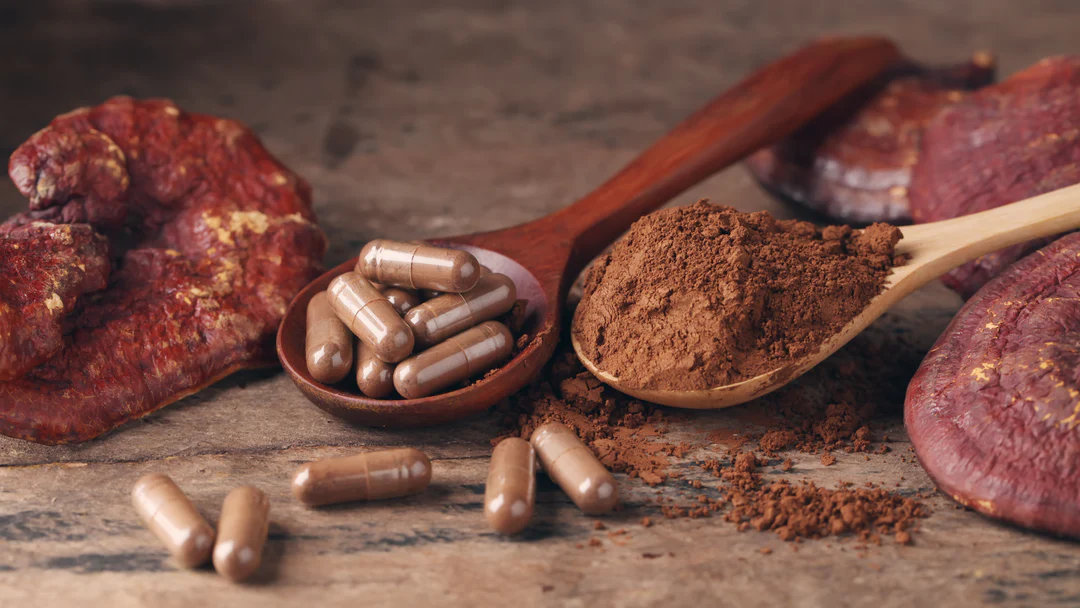
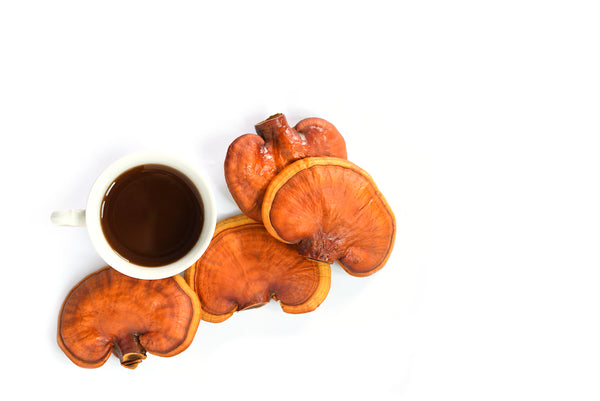
Reishi is a reddish-brown, glossy mushroom that grows on decaying hardwood trees across Asia. In China, it has been called Lingzhi ("mushroom of immortality") for millennia, and it appears throughout traditional Chinese medicine as a symbol of prosperity and longevity. Unlike stimulating mushrooms such as Cordyceps, Reishi is classified as an adaptogen with a calming, grounding profile — which is why it's most often taken in the evening.
Today, Reishi extract is available as capsules, powders, and tinctures, standardized for its two main active compound groups: polysaccharides (including beta-glucans) and triterpenoids. Modern phytochemical analysis has identified over 400 bioactive compounds in Reishi, which is part of why it's studied across such a wide range of health areas.
What Recent Research Says About Reishi
Reishi has moved beyond folk medicine into active clinical research. Here's a summary of some of the most relevant recent studies:
- 2025 meta-analysis (971 participants): A GRADE-assessed systematic review and meta-analysis of 17 randomized controlled trials, published in Food Science & Nutrition, found that Reishi supplementation was associated with reductions in BMI and improvements in oxidative stress markers, particularly at lower doses (under 1,400 mg/day) and in adults under 50. The authors were careful to note that overall evidence quality is still rated low, and larger trials are needed.
- 2024 randomized controlled trial (78 participants): A double-blind, placebo-controlled study published in the International Journal of Medicinal Mushrooms gave female college students under psychological stress either 500mg or 1,000mg of Reishi daily for 30 days. The 1,000mg group showed significant improvements in anxiety, depression, vitality, and overall well-being scores compared to placebo.
- 2026 systematic review & meta-analysis (preclinical): Published in Pharmaceuticals, this review of 23 studies found that Reishi's triterpene compounds consistently reduced inflammatory markers (TNF-α, IL-6) in laboratory and animal models, primarily by suppressing NF-κB and MAPK signaling pathways — two of the body's main inflammation "switches."
- 2021 systematic review of beta-glucans: A review of 34 randomized controlled trials in Food & Function looked at beta-glucans from several medicinal mushrooms, including Reishi. It found consistent immune-modulating effects, including fewer and shorter symptomatic colds in people prone to recurring respiratory infections.
Key Health Benefits of Reishi
Immune System Support
Reishi's immune-supporting reputation centers on its beta-glucans — complex sugars in the mushroom's cell walls that interact with immune cell receptors. An early 2009 study found that Reishi polysaccharides help strengthen the immune system and support vascular health, and a broader 2021 review of 34 controlled trials on fungal beta-glucans (including Reishi) confirmed reduced frequency and severity of colds in people with recurring respiratory infections.
Sleep, Stress & Mood Support
Lingzhi has a calming effect without causing drowsiness or dependency. Rather than sedating you, Reishi is thought to help regulate the body's natural stress response, which in turn supports the body's own rhythm for falling and staying asleep. This is backed by more than tradition: in the 2024 trial mentioned above, participants taking 1,000mg of Reishi daily for 30 days saw measurable improvements in anxiety and depression scores compared to placebo — not just subjective "feeling calmer." This is why Reishi is often paired with Lion's Mane or magnesium in evening-focused supplement blends: the goal is calm, restorative rest rather than a forced "knock-out" effect.
Anti-Inflammatory & Antioxidant Properties
Reishi's antioxidant compounds help neutralize free radicals — unstable molecules linked to cellular damage, chronic disease risk, and visible signs of aging. The 2026 preclinical review referenced above adds mechanistic detail: Reishi's triterpenes appear to consistently reduce inflammatory markers like TNF-α and IL-6 by acting on the NF-κB and MAPK pathways, two of the body's central inflammation-signaling routes. The 2025 meta-analysis of human trials also found measurable improvements in oxidative stress markers like glutathione peroxidase (GPx), an enzyme the body uses to neutralize oxidative damage.
Natural Antimicrobial Activity
Laboratory research has found that Ganoderma lucidum extracts show antimicrobial activity against several Candida strains, including Candida albicans, and can help inhibit Candida biofilm formation in vitro. It's worth being precise here: this is laboratory (in-vitro) evidence, not a clinical claim that Reishi treats fungal infections in humans — but it helps explain Reishi's long history of use for general microbial balance in traditional medicine.
How to Take Reishi
Reishi extract capsules are the most convenient and consistent way to get a standardized dose of beta-glucans and triterpenes. Because of its calming profile, most people take Reishi in the evening, roughly 30–60 minutes before bed. Clinical studies on Reishi typically run 30 days or longer before measuring results, so it's an adaptogen best judged over weeks, not days — many people notice a difference in sleep quality and stress resilience after 2–3 weeks of consistent use.
Is Reishi Safe? Side Effects to Know
Across the clinical trials referenced above, Reishi was generally well tolerated at daily doses ranging from 500mg to over 1,000mg. As with any supplement, it's a good idea to start with a lower dose to see how your body responds, and to check with a doctor first if you're pregnant, breastfeeding, on blood-thinning medication, or managing a chronic condition. Reishi supplements are not a replacement for a varied, balanced diet or medical treatment.
Reishi vs. Other Medicinal Mushrooms
Each functional mushroom tends to have its own "specialty" in the research. Reishi is best known for calm, sleep, and immune support. Lion's Mane is more associated with focus and cognitive support. Cordyceps is typically studied for energy and physical performance. Chaga leans toward general immune and antioxidant support. Many people combine two or three depending on the time of day and their goals — for example, Reishi in the evening and Lion's Mane or Cordyceps earlier in the day.
See Mighti's Reishi extract and order yours here.
Frequently Asked Questions About Reishi
Reishi is most commonly used to support calm, restful sleep, immune function, and the body's response to stress. It has been used in traditional Chinese medicine for over 2,000 years, and recent clinical trials (2024–2026) have tested these effects directly in human studies.
Reishi doesn't sedate you the way sleep medication does. Instead, it supports the body's natural stress response. A 2024 randomized controlled trial found that 1,000mg of Reishi daily for 30 days significantly improved anxiety, depression, and vitality scores compared to placebo.
Reishi is generally well tolerated for daily use by healthy adults, based on clinical trials using doses from 500mg to over 1,000mg per day. As with any supplement, start with a lower dose and consult a doctor first if you're pregnant, breastfeeding, on medication, or managing a health condition.
Reishi is an adaptogen, so effects tend to build gradually. Clinical trials typically measure results after 30 days of consistent daily use, and many people notice a difference in sleep quality and stress resilience within 2–3 weeks.
Reishi is best known for calm, sleep, and immune support, while Lion's Mane is more associated with focus, memory, and cognitive support. Many people take Reishi in the evening and Lion's Mane earlier in the day to support both goals.
Both. Reishi has over 2,000 years of traditional use, and it's now an active area of clinical research. Multiple peer-reviewed studies published between 2021 and 2026 — including randomized controlled trials and systematic reviews — have examined its effects on immunity, stress, inflammation, and metabolic markers.
# reishi capsules # supplement # Chinese medicine # reishi powder